



CA I
CA I is a cytosolic carbonic anhydrase isozyme that catalyzes reversible CO2 hydration to bicarbonate and protons, supporting acid-base balance, respiration, CO2/HCO3- transport, and pH homeostasis[1]. Mechanistically, CA isoforms participate in ion transport and electrolyte secretion, and several isoforms form functional metabolons with anion exchangers or Na+/HCO3- cotransporters[1]. In experimental disease contexts, cytosolic CA I, CA II, and CA XIII are down-regulated in colorectal cancer tissue compared with matched normal mucosa, supporting their evaluation in tumor biology models[2]. Compared with related isoforms, CA I is cytosolic, whereas CA IX and CA XII are membrane-associated tumor-related isoforms, and CA VA/VB are mitochondrial targets linked to metabolic drug-design studies[1]. This distinction is critical because CA IX inhibition addresses hypoxic tumor pH regulation, whereas CA I studies more directly model cytosolic CO2/HCO3- conversion and erythrocyte-associated enzyme pharmacology[1][3]. For experimental applications, hydroperoxides, alcohols, acetates, bromophenols, and selected clinical drugs inhibit hCA I and hCA II in vitro, providing chemical tools for isoform-comparative inhibitor profiling[4][5][6].
References:
- [1]. Magometschnigg D. Angiotensin-Rezeptor-Blocker--Bedeutung für die Hochdrucktherapie [Angiotensin receptor blockers--significance for the therapy of hypertension]. Wien Med Wochenschr. 2001;151(7-8):153-6. German. PMID: 11450162. et al. Angiotensin-Rezeptor-Blocker--Bedeutung für die Hochdrucktherapie [Angiotensin receptor blockers--significance for the therapy of hypertension]. Wien Med Wochenschr. 2001;151(7-8):153-6. German. [Content Brief]
- [2]. Kummola L, et al. Expression of a novel carbonic anhydrase, CA XIII, in normal and neoplastic colorectal mucosa. BMC Cancer. 2005 Apr 18;5:41. [Content Brief]
- [3]. Jiang R, et al. Effectiveness of exercise on perinatal depression and anxiety symptoms: A network meta-analysis and dose-response analysis. Int J Gynaecol Obstet. 2026 Jun;173(3):1308-1324. [Content Brief]
- [4]. Kose LP, et al. The human carbonic anhydrase isoenzymes I and II inhibitory effects of some hydroperoxides, alcohols, and acetates. J Enzyme Inhib Med Chem. 2016 Dec;31(6):1248-53. [Content Brief]
- [5]. Taslimi P, et al. The effects of some bromophenols on human carbonic anhydrase isoenzymes. J Enzyme Inhib Med Chem. 2016 Aug;31(4):603-7. [Content Brief]
- [6]. Güller U, et al. In vitro and in silico interactions of antiulcer, glucocorticoids and urological drugs on human carbonic anhydrase I and II isozymes. Biopharm Drug Dispos. 2022 Apr;43(2):47-56. [Content Brief]
-
CA I Related Products (67)
Related Products (67)

-
Recombinant Proteins (1)
-
Indisulam
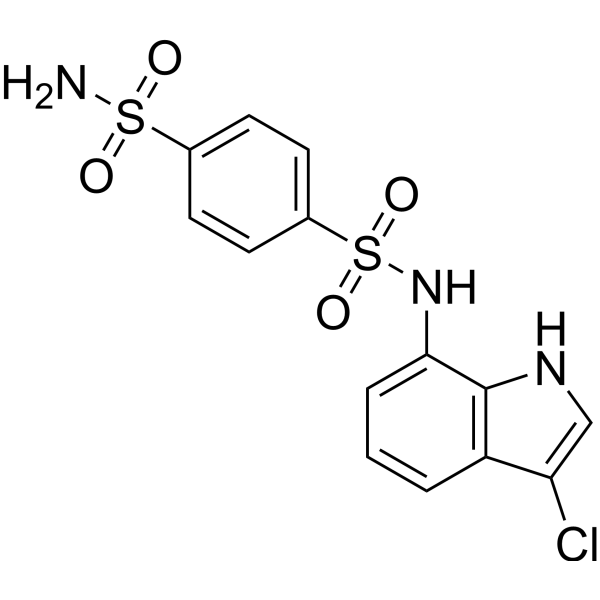 0 ImagesSynonyms: E 7070Indisulam (E 7070) is a carbonic anhydrase inhibitor and RBM39 molecular glue degrader, with Ki values of 31, 15, and 24 nM against human carbonic anhydrase I, II, and IX, respectively, and a Ki value of 65 nM against bovine carbonic anhydrase IV. Indisulam promotes the recruitment of RBM39 to the CUL4-DCAF15 E3 ubiquitin ligase complex, triggering polyubiquitination and proteasomal degradation of RBM39. Indisulam induces aberrant pre-mRNA splicing, G1 cell cycle arrest, and cell death in cancer cells. As an anticancer agent, Indisulam drives tumor regression and growth inhibition in xenograft models. Indisulam can be used in research related to solid tumors, hematologic and lymphoid malignancies, colorectal cancer, and non-small cell lung cancer.
-
5,6-Dihydro-2H-pyran-2-one
 0 ImagesCat. No.: HY-W044762CAS No.: 3393-45-15,6-Dihydro-2H-pyran-2-one (Compound 1) is a prodrug-type carbonic anhydrase inhibitor. 5,6-Dihydro-2H-pyran-2-one can specifically inhibit the tumor-associated subtype hCA IX and the cytoplasmic subtype hCA I with Ki values of 1.35 and 8.03 μM. 5,6-Dihydro-2H-pyran-2-one can be used for the research on hypoxia-related cancer.
-
Elsulfavirine
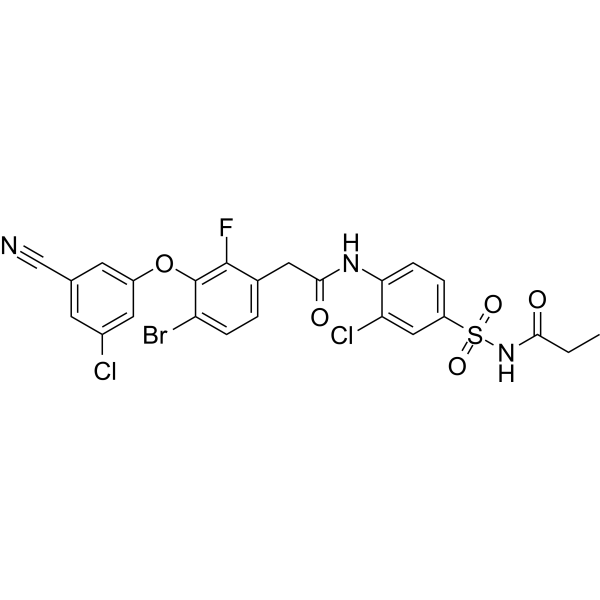 0 ImagesSynonyms: R-1206Elsulfavirine (R-1206) is an orally active human carbonic anhydrase (carbonic anhydrase, CA) inhibitor and an allosteric inhibitor of HIV-1 non-nucleoside reverse transcriptase (NNRT). Elsulfavirine also targets and blocks the interaction between adenylosuccinate lyase (ADSL) and insulin-induced gene proteins INSIG1/2, blocks SREBP-1-mediated de novo lipid synthesis, and inhibits the proliferation of liver cancer cells. The combination of Elsulfavirine and Lenvatinib (HY-10981) produces a synergistic anti-tumor effect. Elsulfavirine is converted into the active metabolite VM1500A in vivo, blocks the DNA polymerase activity of reverse transcriptase, and inhibits HIV-1 replication. Elsulfavirine exhibits a Ki of 1960 nM-52400 nM against human carbonic anhydrase isoforms including I, VII, VI, VA, VB, IX, XIII, XIV. Elsulfavirine is used in studies related to HIV-1 infection and liver cancer.
-
4-Chloro-3-sulfamoylbenzoic acid
 0 Images4-Chloro-3-sulfamoylbenzoic acid is a weak inhibitor of human carbonic anhydrase isoforms hCA I, hCA II, hCA IV, and hCA IX, and a synthesis intermediate for carbonic anhydrase inhibitors. 4-Chloro-3-sulfamoylbenzoic acid is the major metabolite of tripamide detected in tissues, urine, and feces of rats and rabbits following Tripamide (HY-106570) administration. 4-Chloro-3-sulfamoylbenzoic acid can be used for the study of carbonic anhydrase inhibition and species differences in drug metabolism.
-
hCAIX-IN-18
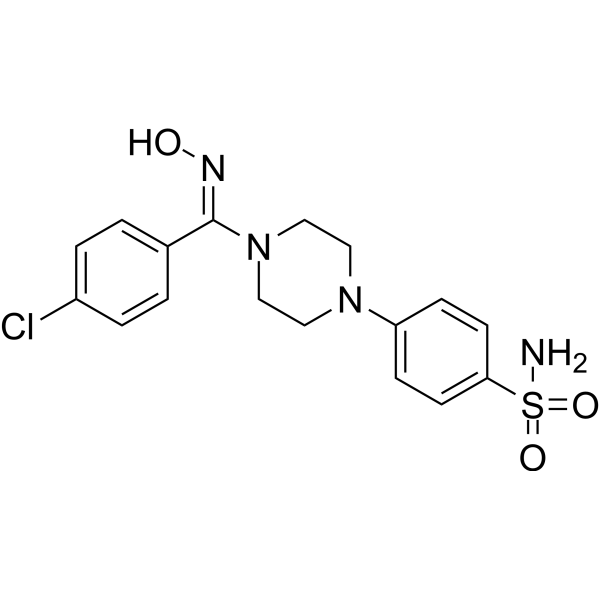 0 ImagesCat. No.: HY-149301CAS No.: 2925261-76-1hCAIX-IN-18 (compound 30) is an inhibitor of carbonic anhydrase (CA), with Kis of 3.5 nM, 9.4 nM, 43.0 nM and 8.2 nM for hCAI, hCAII, hCAIX, hCAXII, respectively. hCAIX-IN-18 can be used for cancer research.
-
COX-2/CA II-2
 0 ImagesCat. No.: HY-184938COX-2/CA II-2 is an orally active dual selective inhibitor targeting COX-2 and hCA II. COX-2/CA II-2 inhibits COX-2 with an IC50 value of 0.05 μM (SI = 12.02 vs COX-1) and hCA II with a Ki value of 62.6 nM (SI = 704.2 vs hCA I). COX-2/CA II-2 demonstrates significant analgesic and anti-inflammatory effects with rapid onset and sustained duration in animal models, shows improved gastric safety with reduced ulcerogenic liability, and exhibits a gradual intraocular pressure (IOP)-lowering effect without statistical significance relative to the sham-treated eye in rabbit glaucoma models. COX-2/CA II-2 can be used for anti-inflammatory, analgesic and antiglaucoma research.
-
CAII-IN-15
 0 ImagesCat. No.: HY-183283CAII-IN-15 is a potent carbonic anhydrase II (CA II) inhibitor with a hCA II IC50 of 10 nM. CAII-IN-15 elevates cGMP levels, releases nitric oxide, reduces oxidative stress, and exhibits neuroprotective activity in vitro. CAII-IN-15 inhibits NLRP3 inflammasome activation, reduces neuronal apoptosis. CAII-IN-15 reduces Intraocular pressure (IOP) in rabbits. CAII-IN-15 can be used for the research of glaucoma.
-
GZ22-4
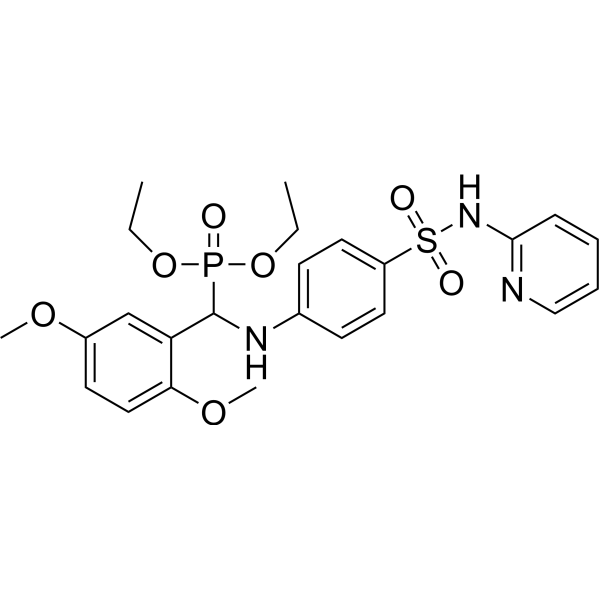
 0 ImagesCat. No.: HY-D2345Purity: 99.37%GZ22-4 is a near-infrared (NIR) fluorescent probe. GZ22-4 shows high affinity for carbonic anhydrase IX (CAIX), with a Kd of 0.2 nM. GZ22-4 can be used for the research of visualize CAIX-positive tumors.
-
CAI/II-IN-13
 0 ImagesCat. No.: HY-178922CAI/II-IN-13 (Compound 5f) is a CAI/II inhibitor, with IC50 values of 309.16 nM for hCA I and 267.27 nM for hCA II. CAI/II-IN-13 exhibits potent and selective antiproliferative activity against A549 lung cancer cells (IC50 = 0.58 μM). CAI/II-IN-13 can be used for the study of lung cancer.
-
BChE/hCA II-IN-1
 0 ImagesCat. No.: HY-178017BChE/hCA II-IN-1 (Compound 20) is a dual-functional inhibitor of Butyrylcholinesterase (BChE) and human carbonic anhydrase II (hCA II) with IC50s of 76.50 and 10.69 μM for BChE and hCA II, respectively. BChE/hCA II-IN-1 can be used for neurodegenerative diseases like Alzheimer's and glaucoma research.
-
CAXII-IN-3
 0 ImagesCat. No.: HY-178030CAXII-IN-3 is an effective carbonic anhydrase (CA XII) inhibitor with a Ki of 53 nM. CAXII-IN-3 exhibits selective inhibition against multiple human CA subtypes with Kis of 5.3 μM, 75 nM, 1.9 μM, > 10 μM against CA I, CA II, CA IV and CA IX. CAXII-IN-3 mainly inhibits CA II and XII, and reduces aqueous humor production. CAXII-IN-3 exhibits β3-AR agonistic activity, can dilate retinal blood vessels, and improve optic nerve perfusion. CAXII-IN-3 can be used in the research of ocular disorders such as glaucoma.
-
CAII-IN-12
 0 ImagesCat. No.: HY-180056CAII-IN-12 (compound 6c) is a potent and selective carbonic anhydrase (CA) II and VII inhibitor (hCA II Ki = 47.8 nM, hCA VII Ki = 3.6 nM) with anti-epilepitic activity. CAII-IN-12 displays selectivity over hCA I (Ki = 370 nM). CAII-IN-12 exhibits potent anticonvulsant activity in both Pentylenetetrazol- and Pilocarpine (HY-B0726A)-induced seizure mouse models. CAII-IN-12 increases expression of KCC2 in the hippocampus, maintains neuronal integrity, and reduces mTOR activity. CAII-IN-12 can be used for epilepsy research.
-
BChE-IN-36
 0 ImagesCat. No.: HY-169163hBChE-IN-4 (compound 40) is a potent hCA activator and BChE inhibitor with KA values of 266, 76.9, 918, 893, 98.0 nM for hCA I, hCA II, hCA IV, hCA VB, hCA VII, IC50 values of 72.1, 4.2 nM for eeAChE, eqBChE, respectively. hBChE-IN-4 shows no cytotoxicity. hBChE-IN-4 shows potent procognitive effects. hBChE-IN-4 has the potential for the research of neurodegenerative diseases and other neuropsychiatric disorders.
-
hCA-IN-1
 0 ImagesCat. No.: HY-175245hCA-IN-1 (Compound 5u) is an hCA inhibitor with Ki values of 159.2, 4.8, 15.5, and 2 nM against hCA I, hCA II, hCA IX, and hCA XII, respectively. hCA-IN-1 exhibits broad-spectrum anticancer activity against melanoma, breast, and colon cancer cells. ADME predictions indicate that hCA-IN-1 has good solubility and oral bioavailability. hCA-IN-1 can be used in tumor research.
-
Carbonic anhydrase inhibitor 14
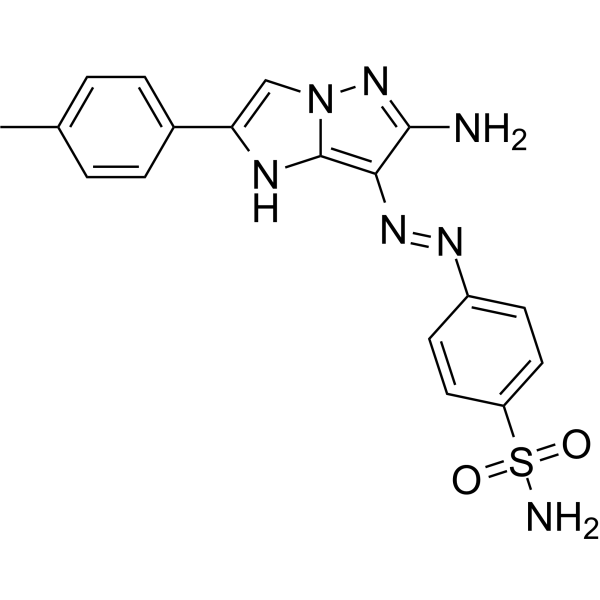 0 ImagesCat. No.: HY-150570CAS No.: 2410402-75-2Carbonic anhydrase inhibitor 14 (Compound 8b) is a carbonic anhydrase (CA) inhibitor with Ki values of 1203, 99.7, 9.4 and 27.7 nM against hCA I, hCA II, hCA IX and hCA XII, respectively. Carbonic anhydrase inhibitor 14 can also inhibit CDK2 with an IC50 of 20.3 μM. Carbonic anhydrase inhibitor 14 shows antitumor activity.
-
Carbonic anhydrase-IN-37
 0 ImagesCat. No.: HY-180189Carbonic anhydrase-IN-37 (compound 9a) is a potent and orally active carbonic anhydrase (CA) inhibitor with Kis of 9.7 and 1.0 nM for hCA VA and hCA VB, respectively. Carbonic anhydrase-IN-37 shows anti allodynic and antihyperalgesic effects on Paclitaxel (HY-B0015)-induced neuropathic pain in mice. Carbonic anhydrase-IN-37 can be used for neuropathic pain research.
-
Methyl acetazolamide
 0 ImagesMethyl acetazolamide (Propazolamide) is a carbonic anhydrase inhibitor with Ki values of 37.5 nM against Enterococcus faecium α-CA, 250.1 nM against Enterococcus faecium γ-CA, 235.4 nM against human CA I, and 37.2 nM against human CA II. Methyl acetazolamide can be used for the research of enterococcus infections.
-
VEGFR/PDGFR/CA II-IN-1
 0 ImagesCat. No.: HY-184656CAS No.: 3099422-14-4VEGFR/PDGFR/CA II-IN-1 is a VEGFR/PDGFR/CA II inhibitor. VEGFR/PDGFR/CA II-IN-1 potently inhibits VEGFR2 (IC50 = 62.66 nM), PDGFRα (IC50 = 18.65 nM), PDGFRβ (IC50 = 5.23 nM), and hCA II (Ki = 19.4 nM), with weaker activity against hCA I (Ki = 154.2 nM) and hCA IX (Ki = 121.0 nM). VEGFR/PDGFR/CA II-IN-1 exhibits potent antiproliferative activity in VEGFR2-BAF3 cells and robust inhibition of angiogenesis in human umbilical vein endothelial cells (HUVECs). VEGFR/PDGFR/CA II-IN-1 inhibits the formation of corneal neovascularization in rabbits through multiple signaling pathways, and significantly reduced intraocular pressure (IOP) in both acute and chronic glaucoma models. VEGFR/PDGFR/CA II-IN-1 can be used to study neovascular glaucoma (NVG).
-
CAII-IN-14
 0 ImagesCat. No.: HY-181510CAII-IN-14 (Compound 3o) is a human carbonic anhydrase II (hCA II) inhibitor with a Ki value of 1.65 nM. CAII-IN-14 also inhibits hCA I(Ki = 6.15 nM) and hCA IX(Ki = 5.43 nM). CAII-IN-14 exhibits predicted drug-like properties.




